
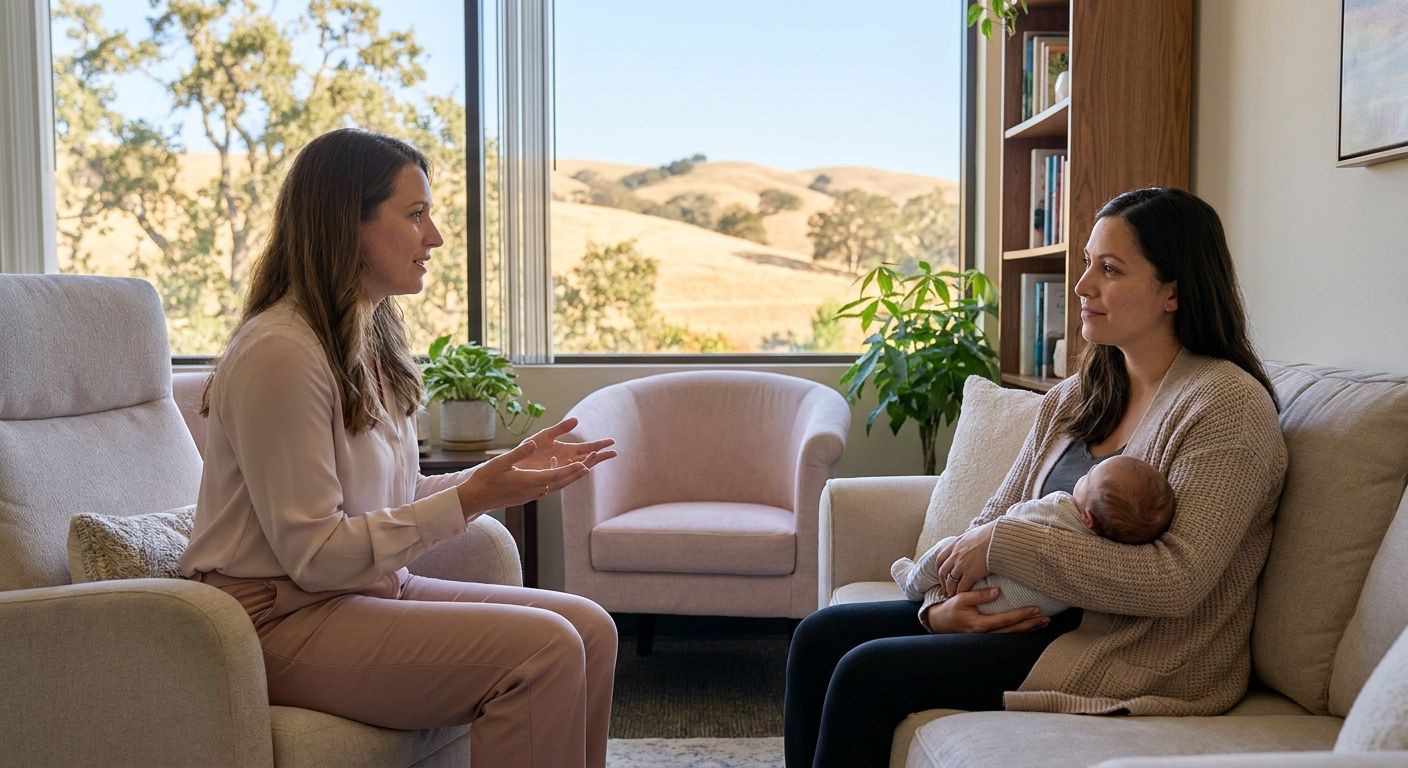
Postpartum depression doesn't wait for a convenient moment, and neither should the decision to get help — this guide breaks down what postpartum depression therapy actually looks like for new mothers in San Ramon and how to pick an approach that fits your situation in 2026.
- Postpartum depression therapy in San Ramon works best when it starts within the first 6 months after birth. Recommended.
- About 1 in 8 mothers report postpartum depression symptoms, per CDC surveillance data — you're not the exception.
- Faith-integrated therapy suits mothers who want spiritual language alongside clinical care; skip it if you prefer a secular approach only.
- Teletherapy fits newborn schedules, but severe symptoms often respond better to in-person sessions. Consider both.
- Sycamore Grove Counseling offers individual and faith-integrated postpartum support locally — a solid starting point.
Why This Matters
Postpartum depression is not the same as the exhaustion or weepiness that shows up in the first two weeks after delivery. Baby blues fade on their own. Postpartum depression persists, deepens, and often brings guilt, rage, or a sense of disconnection from the baby that a mother didn't expect and doesn't know how to name.
CDC surveillance data puts postpartum depression symptoms at roughly 1 in 8 new mothers nationally — a number that tells you this is common, not a personal failing. Sycamore Grove Counseling works with mothers in San Ramon and Walnut Creek who are past the point of "this will pass" and ready for a structured plan.
Waiting rarely helps. Postpartum depression that goes untreated past the first year tends to get harder to unwind, partly because sleep debt and identity strain compound each other. Getting a plan in place early is the single biggest lever a new mother has.
Who Postpartum Depression Therapy Is For
This guide is for a mother in San Ramon who had a baby in the last year and notices that the sadness, anxiety, or numbness hasn't lifted after two to three weeks — or came back sharper at three or six months. It's for the mother who feels like she's failing at bonding, who cries without knowing why, or who feels rage she doesn't recognize in herself. It's also for the mother who looks fine on paper — job, partner, support system — and still can't shake the sense that something is wrong. None of that requires a crisis to justify starting therapy.
What to Look For in Postpartum Depression Therapy in San Ramon
Perinatal-Specific Training
A therapist trained in perinatal mental health knows the difference between generalized anxiety and the specific hormonal, identity, and attachment shifts that come with new motherhood. Ask directly whether the clinician has training in perinatal mood disorders — not every licensed therapist does, and general anxiety protocols don't always fit postpartum presentations.
Screening, Not Guesswork
Look for a practice that uses a structured screening tool, such as the Edinburgh Postnatal Depression Scale, rather than relying on a casual conversation to gauge severity. Screening gives both you and the therapist a baseline to measure progress against over the following months.
Scheduling That Fits a Newborn's Clock
A six-week-old doesn't run on a 9-to-5 schedule, and neither should your therapy options. Evening slots, weekend availability, or teletherapy matter more here than in almost any other stage of life — inflexibility is often the real reason mothers drop out of treatment in the first month.
Faith Integration, If It Matters to You
If your recovery includes prayer, scripture, or a faith community, therapy that ignores that entirely can feel incomplete. Faith-integrated therapy doesn't replace clinical technique — it adds language and framing that some mothers find gives them permission to hope again.
Room for Your Partner
Postpartum depression rarely stays contained to one person. A therapist who can bring a partner into a session, even occasionally, helps translate what's happening for the person sharing the household — and reduces the isolation that makes symptoms worse.
Proximity and Follow-Through
San Ramon and Walnut Creek both have practices offering postpartum support, but proximity only matters if you'll actually keep the appointment. A location or format you'll show up to consistently beats a highly credentialed therapist across town you'll cancel on twice a month.
The Right Approach for Your Situation
Individual Postpartum-Focused Therapy — the direct route
Weekly 50-minute sessions built around your symptoms, not a generic depression protocol, give you a private space to say the things you can't say to your partner or your mother. This is the starting point for most mothers with moderate to severe symptoms in 2026, and it's where screening and progress tracking happen most reliably. Verdict: Recommended for any mother whose symptoms have lasted more than two to three weeks.
Faith-Integrated Couples or Family Sessions — the relational pick
When postpartum depression strains a marriage or a mother feels isolated even with a partner in the house, bringing that partner into a session changes the dynamic. Faith-integrated couples therapy works well for mothers who want their partner to understand what's happening and who value a spiritually grounded approach to the relationship strain postpartum depression creates. Verdict: Consider if your relationship is carrying visible tension.
Teletherapy — the convenience pick
A virtual session from the nursery, mid-nap, beats no session at all. Teletherapy removes the childcare-logistics barrier that keeps a lot of new mothers from ever starting, and it works well for mild to moderate symptoms. Verdict: Consider for scheduling flexibility, but pair it with in-person check-ins if symptoms are severe or if safety concerns come up.
Peer Support Groups — the community pick
A structured group of other postpartum mothers can reduce the shame that keeps symptoms hidden, but a group alone rarely substitutes for individual clinical care when symptoms are moderate to severe. Verdict: Skip as your only treatment if symptoms are significant; Consider as an add-on once individual therapy is underway.
Start postpartum therapy in San Ramon
Reach out to begin individual or faith-integrated postpartum support.
What to Avoid
- Treating "self-care" advice as a substitute for therapy. A bath and an early bedtime don't address a mood disorder, even when they help you feel human for an hour.
- A therapist without perinatal training who treats you like a standard anxiety case. Postpartum depression has its own triggers — sleep deprivation, identity loss, hormonal shifts — that a generic protocol misses.
- Waiting for the six-week postpartum visit to bring it up. If symptoms are already interfering with bonding or daily function, that's reason enough to start sooner.
Comparing Your Options
| Approach | Best For | Faith Integration | Format | Verdict |
|---|---|---|---|---|
| Individual postpartum therapy | Moderate to severe symptoms | Optional | In-person or teletherapy | Recommended |
| Faith-integrated couples therapy | Relationship strain, shared faith | Yes | In-person | Consider |
| Teletherapy | Scheduling flexibility, mild-moderate symptoms | Optional | Virtual | Consider |
| Peer support groups | Add-on to reduce isolation | Varies | Group, in-person or virtual | Skip as sole treatment |
FAQ
What is postpartum depression therapy?
Postpartum depression therapy is structured clinical treatment for depressive symptoms that emerge after childbirth and persist beyond the typical two-week baby blues window. It usually combines screening, weekly sessions, and sometimes partner or family involvement.
How is postpartum depression different from baby blues?
Baby blues typically resolve within two weeks after delivery on their own. Postpartum depression lasts longer, often intensifies, and can include guilt, rage, or disconnection from the baby that doesn't lift without treatment.
How soon after birth can therapy help?
Therapy can start as early as the first few weeks postpartum once symptoms are identified through screening. Starting within the first 6 months generally leads to faster symptom improvement than waiting.
Is postpartum depression therapy in San Ramon covered by insurance?
Coverage depends on your specific insurance plan and provider network, so check directly with your insurer before scheduling. Many California plans include mental health benefits, but copays and network requirements vary.
Can faith-integrated therapy help with postpartum depression?
Yes, for mothers who want spiritual framing alongside clinical treatment. It doesn't replace evidence-based technique but adds language around hope and meaning that some mothers find supportive during recovery.
Does couples therapy help with postpartum depression?
It can, especially when the depression is straining the relationship or a partner doesn't understand what's happening. Bringing a partner into sessions reduces isolation and improves household support.
How long does postpartum depression therapy take to work?
Many mothers notice symptom shifts within 6 to 12 weekly sessions, though timelines vary by severity and consistency of attendance. Screening tools help track whether progress is happening.
Is teletherapy effective for postpartum depression?
Teletherapy works well for mild to moderate symptoms and removes the childcare barrier that stops many new mothers from starting treatment. Severe symptoms often benefit from adding in-person sessions.
One Last Thing
Postpartum depression isn't only a mother's experience — published research puts paternal postpartum depression at roughly 1 in 10 fathers, which is part of why bringing a partner into even one or two sessions changes the household dynamic more than people expect. If your partner has been dismissive or confused rather than unkind, that's often the gap a joint session closes. Sycamore Grove Counseling treats that as part of postpartum care, not a separate issue.
Starting postpartum depression therapy in San Ramon in 2026 isn't about waiting until things fall apart. It's about naming what's happening at three weeks, three months, or nine months postpartum and getting a clinician trained to work with exactly that.